
Compare
Two cities. One decision.
Line them up side by side. Cheaper, warmer, more alive - see it at a glance.

At a glance
Monthly cost breakdown
Short-let nomad pricing (1-3 months, furnished)
Who thrives here
Kuala Lumpur
Ideal for
- Culture-first travelers who like living in a place with layers
- Food-obsessed nomads
- Nomads stretching a runway - freelancers, early founders, sabbaticals
- Nomads earning well who want proper city infrastructure
Probably skip if
- Ocean-obsessed nomads
- Anyone who hates humidity or extreme heat
Canggu
Ideal for
- Surfers who want to paddle out before work
- Extroverted nomads - the community is huge and constant
- Founders in a build-in-public phase who thrive on cafés + cowork
- Anyone who wants sun, gym, açaí and beach clubs all in walking scooter distance
Probably skip if
- Peace-seekers - traffic and construction are relentless
- Culture-first travelers - Canggu is a global nomad bubble
- People who dislike scooters - you basically need one
Weather
Kuala Lumpur
Best months
Average around 28°C. Best months: May, Jun, Jul.
Canggu
Best months
Tropical. Dry season May-Sep is glorious. Wet season Nov-Mar.
Vibe
Kuala Lumpur
Southeast Asia's most underrated capital - mind-bending food, cheap high-rises, English everywhere.
Canggu
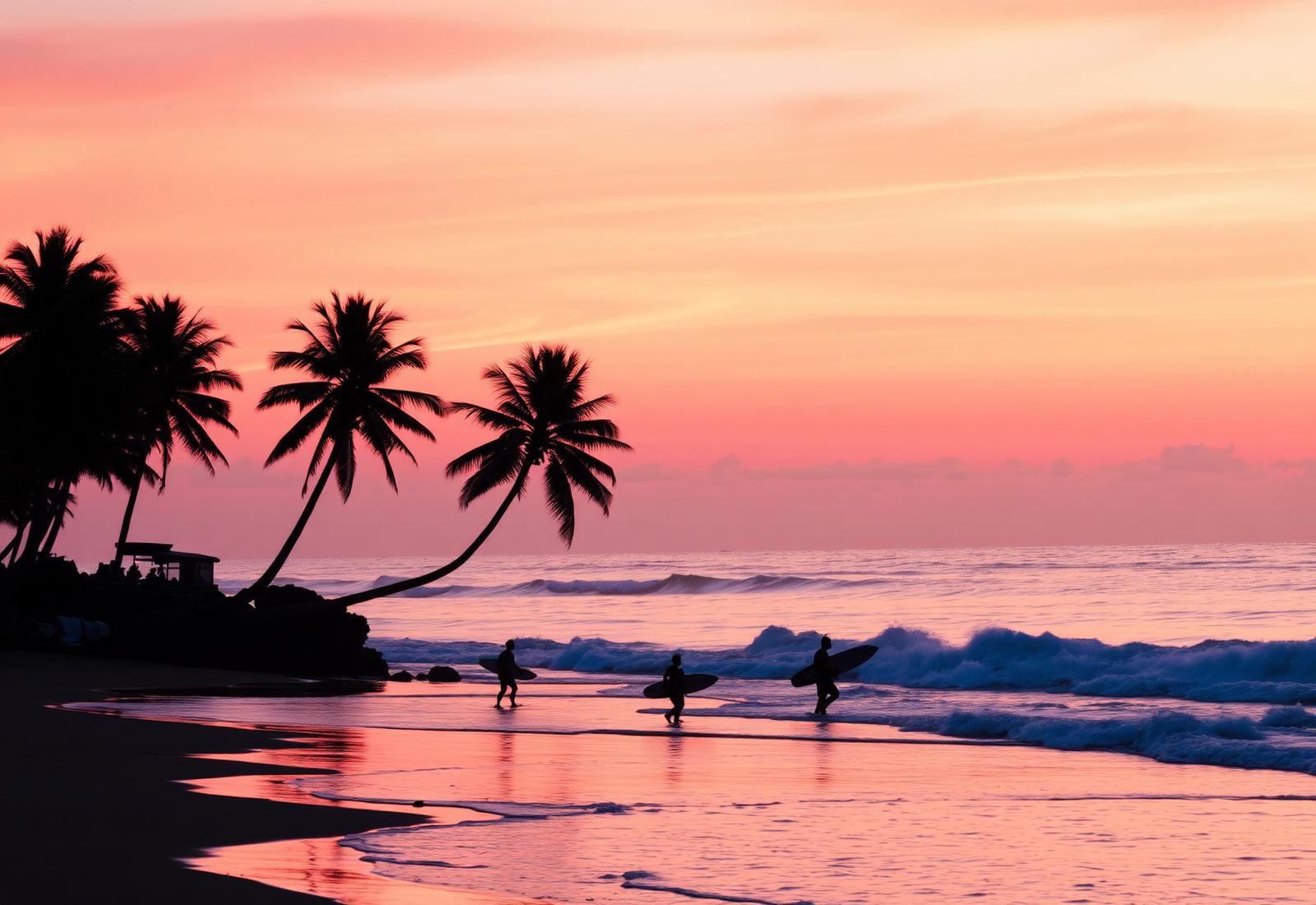
Bali's nomad epicentre: coworkings between rice paddies, longboarders at every break and a warung on every corner.
Neighborhoods to live in
Kuala Lumpur
Bangsar
The expat/nomad default - cafés, restaurants, walkable-ish.
Mont Kiara
Upmarket high-rise neighborhood - pools, gyms, more expensive.
Bukit Bintang
Central chaos - nightlife, malls, business hotels.
TTDI
Taman Tun Dr Ismail has a residential feel, independent food spots and access to wooded recreation areas.
Chinatown
Around Petaling Street, old shophouses sit alongside contemporary cafés, cocktail bars and market stalls.
Canggu
Berawa
Beach clubs, coworking (Dojo), the newest cafés. Center of the scene.
Pererenan
Quieter, rice-field vibe, faster-growing. Where people move when Berawa gets too much.
Batu Bolong
Original nomad Canggu - surf break, Old Man's bar, tighter but iconic.
Padang Linjong
An inland Canggu pocket with villas, cafés and access toward the Echo Beach area.
Babakan
A village area farther inland, where residential lanes and remaining rice fields feel removed from the beach traffic.
Pros & cons
Kuala Lumpur
Pros
- Genuinely affordable - money goes far
- World-class food scene
- Depth - you never run out of things to see
- Real nightlife - every night, not just weekends
Cons
- Humidity and heat can be brutal outside peak months
- Bureaucracy for long stays can be slow
- Real estate turnover is quick - good apartments go in days
Canggu
Pros
- Ultra-cheap living
- Huge nomad scene
- World-class surf
- Year-round warmth
Cons
- Traffic chaos
- Rainy season floods
- Wi-Fi can wobble
Visa & residency
Kuala Lumpur
Most Western passports 90 days visa-free. DE Rantau nomad pass available up to 12 months, renewable.
Canggu
B211A visa or new E33G Remote Worker Visa (up to 1 year).
Want to go deeper? Read the full city guides for the full editorial breakdown.