
Who thrives here
Ideal for
- Solo founders who want café mornings and rooftop evenings
- European nomads chasing sun without leaving the EU
- Creatives and designers drawn to soft light and old tile
- First-time nomads - English is everywhere, safety is high
Probably skip if
- Anyone chasing rock-bottom rent - the city has priced up hard
- Party-first nomads who need 4am energy every night
- People who hate hills, cobblestones or slow bureaucracy
Why people move here
Warm, walkable, safe and one of the most established remote-work cities in Europe. You get ocean, culture and a proper city on the same tram line.
Planning a stay in Lisbon
A month or more in Lisbon is a different trip from a week's holiday. The order you sort things out in matters more than the brands you pick, so here is the sequence most long-stayers follow, with what to look out for at each step.
1. Pick your dates
The most comfortable months in Lisbon are Apr, May, Jun, Sep and around. Arriving at the start of that window gets you the weather without the peak-season rents, and gives you room to extend if you like it. Fares move a lot with weekday, so search a range of dates on Aviasales or Kiwi.com rather than a single day.
2. Plan the first day
Late arrivals are where most first-day stress comes from: no local data, an unfamiliar taxi rank, and a check-in that is still hours away. A fixed-price transfer booked ahead, for example through Kiwitaxi, removes the guesswork, and if your room is not ready you can leave bags nearby with Radical Storage.
3. Find a base, then a home
Book one or two weeks somewhere central with free cancellation, then walk the neighborhoods above before committing to a month. Furnished one-bedrooms run around €1,600/mo here; ask for a recent internet speed test and photos of the desk, and expect monthly discounts of 20-40% off nightly rates.
4. Get connected before you fly
Install a travel eSIM at home, while you still have reliable Wi-Fi, so maps and messages work at the airport. Airalo and Saily both sell data-only plans for Portugal. If you stay longer than a month, a local SIM is usually cheaper, and your eSIM becomes the backup for the day the apartment Wi-Fi drops.
5. Sort insurance and money
Ordinary holiday policies often stop covering you after 30 to 90 days, so check the maximum trip length before you go and look for cover that runs by the month. If a visa is involved, confirm the policy meets its requirements. A card with low foreign exchange fees makes rent and deposits in Portugal cheaper.
6. Leave the weekends open
Don't book every tour in week one. Settle in, then pick the one or two trips that matter; sites like Klook and Tiqets let you cancel most bookings a day ahead. For places outside the city, comparing rental cars on Localrent is often cheaper than a guided day trip for two people.
If a flight is delayed or cancelled, you may be owed compensation; services like AirHelp handle the claim. Our Travel Kit has the full list of tools we recommend.
What life looks like
Days begin with a bica at a marble-counter café, drift into coworking above the river, and end on a rooftop watching the light turn pink over the tiled rooftops of Alfama.
Coffee at a Príncipe Real café at 9, deep-work block from a coworking space or the Gulbenkian gardens until lunch, a €12 tasca menu, an afternoon walk down to the river, sunset at Miradouro de Santa Catarina with a beer, dinner around 9. Weekends: a 20-minute train to Costa da Caparica for the beach.
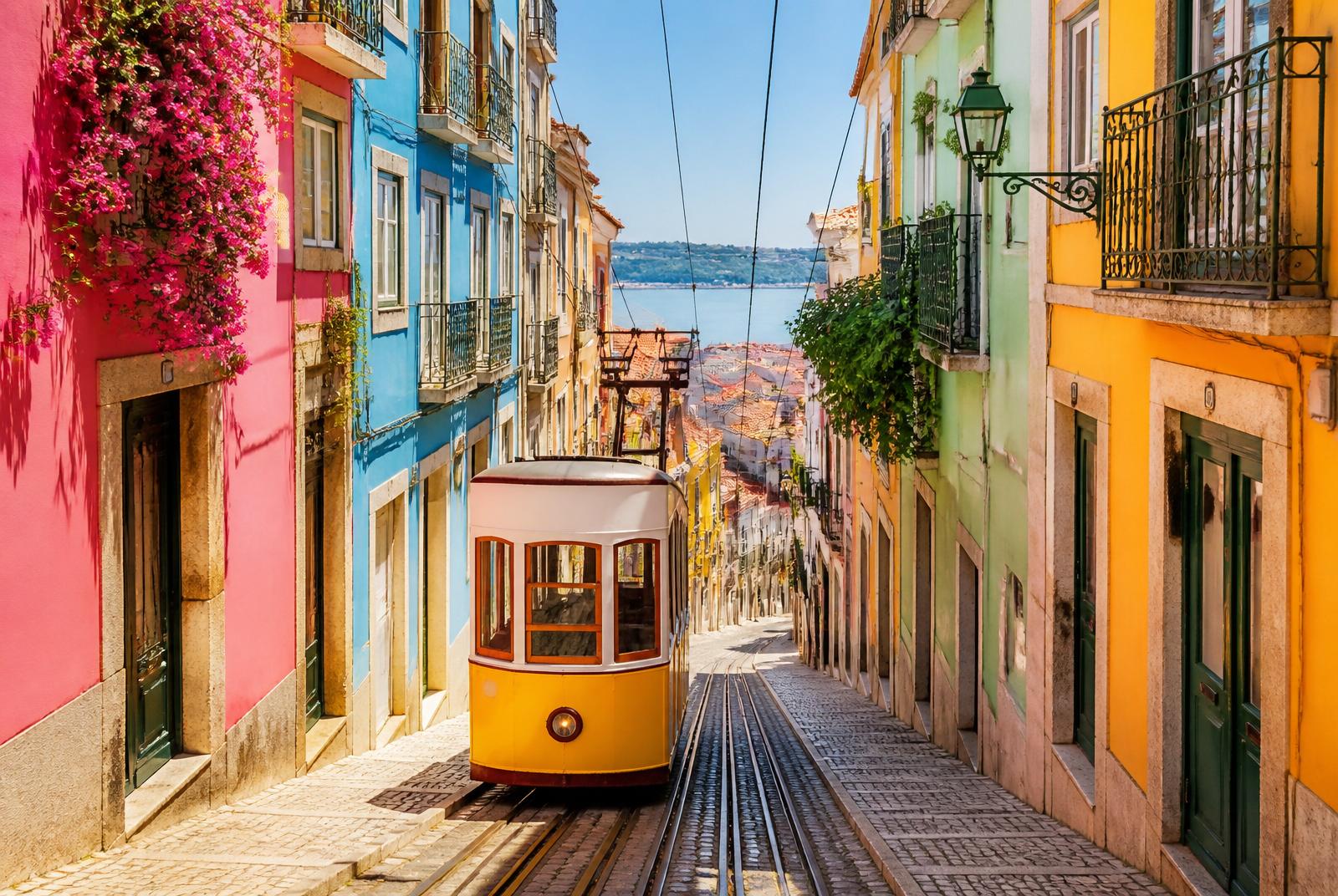
Portugal's soulful capital blends pastel facades, tiled streets, cliff-top viewpoints and an easy Atlantic light that softens every afternoon.
Neighborhoods to live in
Príncipe Real
Elegant, leafy, expensive. Concept stores, natural wine, the best café mornings in the city.
Alfama
Postcard Lisbon - tiles, tram 28, fado at night. Beautiful but touristy and steep.
Marvila
Ex-industrial riverside going creative. Warehouses turned into coworking, breweries and studios.
Campo de Ourique
A residential grid of shops, bakeries and neighborhood restaurants gives Campo de Ourique a settled, local rhythm.
Arroios
Diverse restaurants and busy everyday commerce make Arroios one of Lisbon’s most cosmopolitan residential areas.
Food & café scene
Lisbon eats simply and well: grilled fish, olive oil, natas from Manteigaria, an espresso for €0.90. The last five years brought serious third-wave coffee, natural wine bars and a modern Portuguese scene led by chefs coming back from Copenhagen and New York.
Nightlife & evenings
Evenings start late on a rooftop with a €5 white wine, drift to Bairro Alto for street-drinking around 11pm, and end at Lux Frágil or a warehouse party in Marvila. It's more elegant than loud - think conversation over cocktails, not big-club energy.
Activities & things to do
Surfing at Costa da Caparica, day trips to Sintra, natas at Manteigaria, sunset at Miradouro da Graça, fado nights in Alfama.
beach
Praia de Carcavelos
A broad Atlantic beach on the coastal rail line, Carcavelos is a classic Lisbon day trip for surf and sand.
beach
Parque Florestal de Monsanto
Lisbon’s large forest park offers wooded trails, picnic areas and viewpoints above the city.
nightlife
Pensão Amor
A former boarding house on Rua do Alecrim, Pensão Amor is now a richly decorated bar with theatrical interiors.
nightlife
Bairro Alto
The neighborhood’s narrow streets fill with evening drinkers, with small bars tucked into its old buildings.
Working from here
coworking
Second Home Lisboa
Inside Mercado da Ribeira, Second Home’s plant-filled workspace is a distinctive option for an established coworking base.
cafe
Fábrica Coffee Roasters
One of Lisbon’s established specialty-coffee names, Fábrica focuses on house-roasted beans and straightforward espresso drinks.
Cost of living, in real numbers
Averages hide what actually happens on a Tuesday. Here's what everyday things cost in Lisbon for a nomad on the short-let lifestyle. Numbers are illustrative and can swing 20-30% by neighborhood and season, but they'll give you a realistic feel before you book a flight.
Housing is where costs move most. A furnished short-let (1-3 months) in a central area is roughly €1,600/mo. The same apartment on a 12-month local lease is typically noticeably cheaper. Book 2-3 months out and you'll pay 15-25% less than last-minute weekly rates.
Food swings the second most. Cooking most meals with a couple of dinners out per week runs around €560/mo. Eat out or order in daily and you'll add €400-700/mo on top - especially in the tourist zones.
Everything else is fairly stable. Coworking (€150-280/mo unlimited or €15-25 for a day pass), gym or yoga (€40-70/mo), local SIM with 20 GB (€10-20), and getting around town by transit or the occasional ride will together come in around €540/mo.
Weather & best months
Mediterranean climate. Summers 25-30°C, winters mild around 12°C. Rain mostly Nov-Feb.
Visa & residency
EU/EEA freely. Non-EU remote workers can apply for the D8 Digital Nomad visa; the income requirement is set at four times the Portuguese minimum monthly wage, so the euro figure changes when the minimum wage is updated.
Last checked: November 2026
Pros & cons
Pros
- Mild year-round climate
- Huge, active nomad community
- Excellent food & coffee
- Fast fibre in most flats
Cons
- Rents rising fast
- Steep hills everywhere
- Bureaucracy can be slow