Who thrives here
Ideal for
- Sun-and-sea people who don't want to give up city life
- Culture-first travelers who like living in a place with layers
- Wellness- and yoga-first nomads
- Designers, creatives, and people who read magazines about cities
Probably skip if
- Nomads who prefer chain-hotel predictability
- People who want everything in fluent English
Why people move here
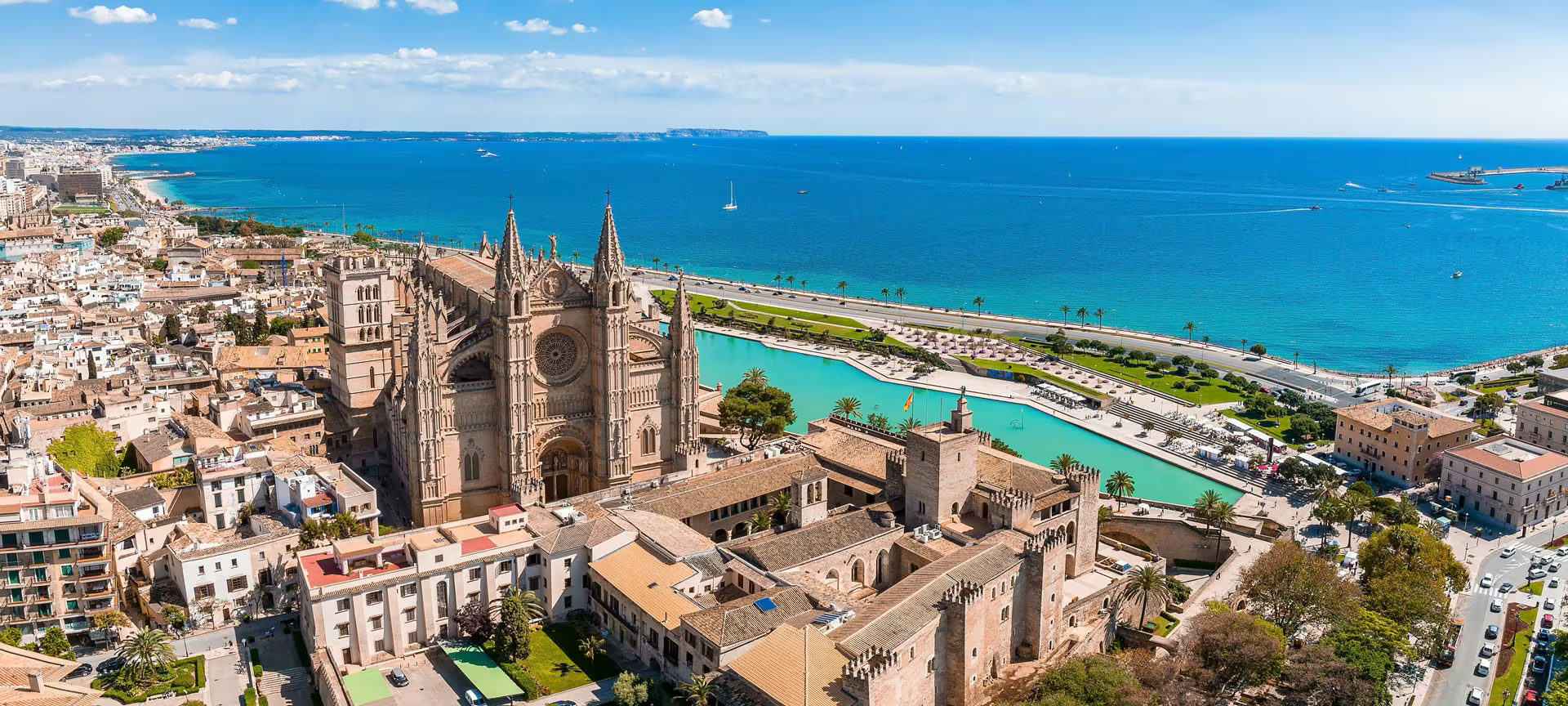
Palma is the smart middle-ground: proper city, ocean everywhere, direct flights to every European hub. The ocean is genuinely close - not a taxi ride, a walk. There is enough history and culture that even a six-month stay leaves you with a list of things you didn't see.
What life looks like
People move to Palma de Mallorca looking for one thing and stay for another. They come for the beach and end up staying for the neighborhood cafés, the weekly market, the friend group that forms after a month. The first two weeks are usually spent walking, mapping cafés, figuring out where locals actually eat. By month three most nomads have found their coworking spot, their gym, their Sunday market - and start telling everyone back home that Palma de Mallorca might be it.
Slow morning at a neighborhood café - flat white, laptop, no rush. Late-morning walk to the water, twenty minutes, sea air on the way back. Deep-work block in a coworking space or a quieter café through lunch. Afternoon errand run - market, gym, a walk through one of the older parts of Palma de Mallorca. Dinner at a spot the friend group has claimed as its own. Home by eleven - early enough to actually sleep.
Palma is the smart middle-ground: proper city, ocean everywhere, direct flights to every European hub.
Neighborhoods to live in
Santa Catalina
Old fishing quarter turned market and café scene - the nomad default.
El Terreno
Faded-glamour hillside above the port with sea views and cheaper rentals.
Portixol
Seafront promenade for morning runs and long lunches.
The old town
Cobblestones, cafés spilling into little squares, and evening bells. Charming but touristy in high season.
The arts and design quarter
Concept stores, galleries, and independent coffee bars. A creative crowd of freelancers and students.
The riverside / seaside promenade
Long walking paths, sunset joggers, and weekend markets. Slightly quieter and family-friendly.
Food & café scene
The food scene in Palma de Mallorca rewards curiosity. Neighborhood markets, small family restaurants, a few destination places for special occasions. Specialty coffee is now a serious scene here - you'll find flat whites as good as anywhere in the world.
Nightlife & evenings
Nightlife in Palma de Mallorca has real range - natural wine bars, dive bars, a few clubs that matter, and dinners that stretch till midnight.
Activities & things to do
Beach, swimming, occasional day-boats. Yoga studios, saunas, cold plunges - a proper wellness scene has settled in. Museums, galleries, weekend markets, walkable historic neighborhoods.
beach
The main city beach
The default swim-and-sunset spot in Palma de Mallorca. Busiest on weekends; go before 10 or after 5 for space.
beach
A quiet cove north of Palma de Mallorca
A short drive or bus ride reaches calmer water, fewer umbrellas and better snorkelling.
beach
Surfer beach
Consistent breaks and a laid-back scene of surf schools, beach shacks and sunset beers.
beach
Family beach with shallow water
Calmer swimming, easy parking, and a promenade lined with cafés and ice-cream kiosks.
beach
Wild coastline day trip
Dramatic cliffs, empty sand, and a picnic with almost nobody around. Bring water and shoes.
nightlife
The main bar street
Where Palma de Mallorca goes out on Fridays. Loud, cheap, and easy to meet people, if you like a party crowd.
nightlife
Cocktail bars in the old center
Small, dim-lit, and taken seriously. Better for a slow drink than a big night out.
nightlife
Live music venues
Jazz trios, indie bands, and DJs on rotation. Look for what's on that week; scenes change fast.
nightlife
Sunset spot with a view
Everyone ends up here for a golden-hour drink. Come early to grab a table on the terrace.
nightlife
Underground club scene
For serious nights out - runs late, dress code is casual but effortful.
Working from here
coworking
Flagship coworking space
The main hub in Palma de Mallorca. Reliable Wi-Fi, phone booths, a strong community and monthly events.
coworking
Boutique co-working with terrace
Smaller, quieter, better coffee. Popular with founders and long-form writers.
coworking
24/7 shared workspace
Membership-only access at any hour - good for jet-lagged first weeks and Asia/US calls.
coworking
Co-working with day passes
No commitment, drop in for €15-25. Perfect for a first week before you settle.
cafe
Specialty coffee roaster
Third-wave beans, single-origin filters and staff who actually care. Laptops welcome off-peak.
cafe
All-day brunch café
Sourdough, eggs and flat whites into the afternoon. Fills up around 11; go early with a laptop.
cafe
Quiet library-style café
Slow service on purpose, big tables and outlets. Ideal for a focused four-hour block.
cafe
Garden or courtyard café
Shaded seating, birds, and enough Wi-Fi for calls. The best warm-weather work spot.
cafe
Neighborhood bakery-café
Locals in the morning, remote workers by noon. Cheap coffee and pastries that beat any chain.
Cost of living, in real numbers
Averages hide what actually happens on a Tuesday. Here's what everyday things cost in Palma de Mallorca for a nomad on the short-let lifestyle. Numbers are illustrative and can swing 20-30% by neighborhood and season, but they'll give you a realistic feel before you book a flight.
Housing is where costs move most. A furnished short-let (1-3 months) in a central area is roughly €1,375/mo. The same apartment on a 12-month local lease often drops to around €875/mo. Book 2-3 months out and you'll pay 15-25% less than last-minute weekly rates.
Food swings the second most. Cooking most meals with a couple of dinners out per week runs around €450/mo. Eat out or order in daily and you'll add €400-700/mo on top - especially in the tourist zones.
Everything else is fairly stable. Coworking (€150-280/mo unlimited or €15-25 for a day pass), gym or yoga (€40-70/mo), local SIM with 20 GB (€10-20), and getting around town by transit or the occasional ride will together come in around €375/mo.
Weather & best months
Average around 21°C. Best months: Apr, May, Sep, Oct.
Visa & residency
EU citizens: unlimited. Others: 90/180 Schengen; Spain's digital-nomad visa launched in 2023 for stays over 90 days.
Pros & cons
Pros
- Warm most of the year, ocean walking distance
- Depth - you never run out of things to see
- Very safe day and night
- Established nomad and expat community - easy to make friends
- Serious wellness infrastructure - yoga, gyms, cold plunges
Cons
- Bureaucracy for long stays can be slow
- Real estate turnover is quick - good apartments go in days


